Every lesson, written down
Each of my YouTube lessons, written up so you can read it, skim it or come back to it while you practise. Every post has the video and links to the free tools that go with it.
November 2026
 5:30
October 2026
 4:28
Grace Notes: The Small Trick That Makes Simple Licks Sound Professional
Add a quick hammer-on or pull-off grace note before each note of a basic melody and it instantly sounds more polished. How to do it, how to practise it and when to hold back.
 14:31
How to Make Guitar Practice as Addictive as Social Media
Borrow the tricks apps and slot machines use to keep you hooked: remove friction, near misses, no cue to stop, streaks, cliffhangers and more, applied to guitar practice.
 13:02
A Guide to My Free Guitar Practice Tools: Fretboard, Exercises, Backing Tracks and Tab
A walk through my four free guitar tools: the Fretboard Navigator, Exercise Generator, Backing Track Creator and Tab Creator, what each does and how to use it.
 5:52
The Two-Note Trick for Hitting a Chord Tone on Every Chord
Two notes on the D string give you a chord tone over all seven chords in A minor. Here's which one to play over each chord, how to move it to any key, and how to practise it.
 4:43
Play the Uncomfortable Notes: A Simple Prompt for More Interesting Solos
If your solos just run the scale up and down, practise picking the awkward, out-of-the-way note. A two-phase exercise in E minor that gets you out of scale habits.
 8:15
The 30-Day Guitar Practice Challenge (and Why It's Not Just "Practise More")
A 30-day guitar challenge: an hour a day, or double your usual practice. Why it works, what to practise, what to do on days away, and the rule for missed days.
 17:00
Barre Chords Made Easier: The Tips That Actually Help (and One I'm Not Sure About)
Struggling with barre chords? Where the pressure really goes, thumb and wrist position, using your elbow, finger order, detuning, setup and songs to practise with.
 3:54
Watched Loads of Guitar Lessons and Still Stuck? The Problem Might Be Application
If you keep finishing guitar lessons with no idea what to do next, the lessons may not be the problem. Here's why applying an idea far more widely is what makes it click.
 5:33
Pick Less: How Compound Techniques Make Your Solos Sound Less Boring
If your improvising feels stale, try picking less. Here's how to string hammer-ons, bends, slides and pull-offs together into licks that need just one pick.
 8:42
13 Ways to Make Your String Bends More Interesting
Thirteen string bending ideas, from rakes, pre-bends and unison bends to jolt bends, flat semitone bends and bend plus tapping, with the frets to try them on.
 8:53
How to Teach Yourself Guitar: Change One Variable at a Time
A simple way to fix your own playing: change one variable, measure it, keep or bin it. How to split your practice, find things to test, and a list of ideas to try.
 5:11
Stop Waiting Until You're Ready to Learn That Song
Putting off a song or writing music until you've learnt other skills first kills motivation and feeds procrastination. Here's why, and how to start in small bites.
 27:00
How to Pick Faster on Guitar Without Losing Accuracy
Practical ways to pick faster and cleaner: visualisation, metronome settings, perfect vs push-the-pace practice, string changes from the arm, and quick self-checks.
 8:51
How to Get Out of Pentatonic Box 1: Learn Position 4 Next
Stuck in box 1 of the minor pentatonic? Learn position 4 next. It sits seven frets higher, looks a lot like box 1, and your licks move straight across to it.
 5:40
Low E Down to B: A Heavy Guitar Tuning Beyond Drop D
Tune just your low E string down to B and leave the rest in standard. How to tune it, which keys and scales suit it, and the chord shapes that work.
 2:56
A Chord Change Exercise: Keep Every Finger Touching a String
A simple silent exercise for faster chord changes: move between two chords without your fingers ever leaving the strings, so you learn the route between shapes.
 24:00
Learn the Guitar Fretboard: 5 Exercises for Fretboard Fluency
Five practical exercises for learning the fretboard in A minor: linking scale shapes, crossing the neck, free play, random positions, octave patterns and ear work.
 17:00
How to Turn Noodling Into Your Own Guitar Phrases (B Dorian Example)
How to use exploratory improvising to build licks of your own: fish for an idea, repeat and refine it, outline an E9 chord with semitone bends, then rearrange it.
 19:00
How to Train Your Ears on Guitar: Intervals, Chords and Singing
A step-by-step ear training framework for guitarists: learn intervals with song references, then chord types, then find, sing and play what you hear on the guitar.
 9:03
An Easy Way to Write Songs on Guitar: The Drop D Drone Method
Write songs without much chord theory: put a melody over the open low D in drop D, then flip it, add octaves, power chords, distortion and fingerstyle patterns.
 10:25
Stuck on a Guitar Plateau? You're Actually at a Crossroads
Why you can't know what will fix your guitar plateau until you've done it, and how undistracted practice time plus about 20% experimentation gets you moving again.
 8:31
How to Add Attitude to Blues and Rock Solos With String Muting
How to mute every string except the one you're playing with both hands, so you can rake through the strings for an aggressive Stevie Ray Vaughan style blues sound.
 8:43
Guitar Vibrato: Why You Should Push or Pull the String, Not Both
Why pushing and pulling the string for vibrato makes it harder to sound even, what really happens to the pitch, and simple tips for a strong, personal vibrato.
 12:13
Why You Should Be Sceptical of Online Guitar Teachers (And How to Learn Independently)
Why online guitar lessons that promise a missing piece deserve some scepticism, and five practical ways to test new ideas and take charge of your own progress.
 1:04:00
What a Realistic Hour of Guitar Practice Looks Like
A real hour of practice, split into six 10-minute blocks of pentatonic and sweep picking work, with what I noticed and changed as I went. Copy the structure.
 18:00
Beginner vs Intermediate Guitarist: 10 Key Differences and How to Practise Them
From fretting pressure and tab reading to muting, timing and recovering from mistakes, here are the skills that separate beginners from intermediates, and how to practise each.
 3:25
Stronger String Bends: Practise Them Without Your Hand Touching the Neck
Weak, wobbly bends usually come from a lack of tension in the fretting hand. This odd exercise of bending with only your fingertips on the neck trains it.
 6:16
The Only Economy Picking Exercise You Really Need
One simple two-string pattern covers both string changes in economy picking. Here's the exercise, how to add the left hand, and three tips on pick, grip and push-through.
September 2026
 7:53
The Simple Reason Your Metal Rhythm Playing Feels Slow: You're Not Warmed Up
A before and after test on Metallica's Battery shows what a 10-minute warm-up of downpicking, gallops and alternate picking does for speed and endurance.
 11:15
Guitar Minesweeper: An Ear and Fretboard Exercise to Do Before You Learn Scales
Pick four frets, play over a backing track in an unknown key and find the notes that work by ear. A beginner exercise for fretboard knowledge and musicality.
 7:29
How to Make Real Progress With Only 15 Minutes of Guitar Practice
Fifteen minutes is enough to get better at guitar if you spend it on a tiny piece of music. Here's what to practise for scales, riffs, chord changes and improv.
 9:14
A Simpler Way to Learn the CAGED System: Three Shapes on Three Strings
Learn the CAGED system for major chords with three small shapes on the D, G and B strings, a 4-3-5 fret pattern to connect them, and how each shape links to CAGED.
 33:00
100 Guitar Tips for Beginner and Intermediate Players, Sorted by Topic
Practice, mindset, fretting and strumming technique, bends and vibrato, improvising, theory, songwriting and tone: my 100 guitar tips, grouped so you can find what you need.
 5:56
The Continuous Playing Exercise for Improvising More Freely
A simple exercise for any level: play a scale you know nonstop at a set tempo, then vary it. It trains you to keep moving and link your licks and phrases together.
 8:19
How to Play Prince's Super Bowl Bend: Technique and Tone
The bend Prince played live at Super Bowl XLI, broken down: the two notes, how to pick it, why you bend it slightly flat, and how I got close to the tone by ear.
 16:00
Drop D Power Chord Variations: 40 Ways to Make Them More Interesting
The standard drop D power chord is used by many and made interesting by few. Here are add9s, major and minor shapes, inversions, dissonant chords and open-string ideas, with tab.
 9:13
Barre Chord Alternatives: Four-String Shapes That Leave Room for Melody
Full barre chords sound blocky. Drop the two low strings and you get major and minor shapes that free up your fingers for hammer-ons, riffs and fills between chords.
 24:00
A Step-by-Step System for Learning Guitar Rhythm From Scratch
Go from no understanding of rhythm to playing quarter, eighth and 16th notes and triplets with a metronome, then turn them into strumming patterns and songs.
 4:32
Messy String Crossing? Move Your Arm, Not Your Wrist
Turning your wrist to change strings brings in tension, a scratchy tone and poor muting. Here's how to test for it and switch to moving from the arm instead.
 4:19
Why Learning a New Song Feels So Frustrating (and How to Fix It)
If a riff you should be able to play keeps tripping you up, you probably haven't learned it yet. Here's a simple test, and how to split memorising from speed.
 5:39
You Don't Need the Whole Fretboard to Be an Interesting Player
Box 1 of the A minor pentatonic, played in two octaves, covers almost every note on the neck. Here's why, and why phrasing matters more than fretboard range.
 7:27
Complexity Is an Option, Not a Goal: Rethinking Creativity on Guitar
A reframe for improvising and writing on guitar: who you're playing for, whether you're impressed or actually enjoying it, and a simple listen-back test.
 5:41
What the Back in Black Bridge Riff Teaches You About Riff Playing
The bridge riff from AC/DC's Back in Black makes you work on one finger per fret, hand synchronisation and muting. Here's how to practise each part of it.
 4:08
How to Change From C to D Faster by Spotting the Shape They Share
C and D look like they share nothing, but two fingers keep the same shape in both. Here's how to slide that shape across, and use the same idea on C to G.
 5:02
Economy vs Alternate Picking: Which Should You Choose?
The pros and cons of economy and alternate picking, why the choice matters less than you think, and the one thing that does matter whichever you pick: pick angle.
 4:04
How to Land Your Guitar Slides on the Right Fret Every Time
If your slides keep overshooting or falling short, look at the target, lock your fingers together, move the thumb with the hand, and practise the slide itself fast.
 3:58
Why Your Strumming Sounds Robotic, and the Simple Fix
Hitting all six strings on every strum flattens your dynamics. Split the chord between downstrokes and upstrokes, pick out single strings, and save the full strum.
 11:03
How to Fit Guitar Practice Into a Busy Life
Mindset and practical tips for making guitar part of a busy life: drop all-or-nothing thinking, the 60 second rule, splitting practice and play, and cutting friction.
 3:20
The Van Halen Style "Infinite Note" Lick in D Minor
A simple shred lick on the B and high e strings where the same note appears twice, giving a rolling, endless sound. Tab, picking and legato options, and how to move it.
 5:06
Explore the Extremes: A Practice Principle That Works at Every Level
Instead of aiming straight for the perfect version, push a technique to both ends. How exploring extremes helps barre chords, pick attack, vibrato and riff writing.
 5:52
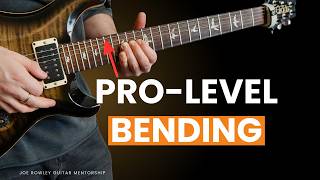
How to Add Vibrato to a String Bend in Two Steps
First make sure you bend from the wrist, then learn bend vibrato two ways: small controlled pushes above the pitch, and deliberately wide vibrato you rein in.
 5:29
Five Habits That Make Metal Riffs Boring, and How to Fix Them
Predictable palm muting, open-string roots, too many techniques, no rhythmic space and aimless melodies. Five fixes to make your metal riffs more interesting.
 4:13
How to Approach Online Guitar Lessons Without Getting Lost in Quick Fixes
Online guitar advice is a mix of great and bad. Here's how I'd treat any lesson or "one trick" tip: as an experiment, given a proper go, backed by focused hours.
 8:18
Five Simple Ways to Make Your Guitar Solos Sound More Professional
Five small things pro guitarists do in their solos: sliding in from outside notes, noises between licks, stacked techniques, bigger interval jumps and melodies across strings.
 6:36
What Playing in Front of Tony Iommi Taught Me About Confidence
I froze playing in front of Tony Iommi. Here's what went wrong, the one question I now ask myself on stage and in practice, and how it applies to your playing.
 5:37
A Cascading Legato Pattern in Fives for More Fluid Lead Playing
A Tremonti-inspired descending legato pattern built from three-note-per-string shapes, played in fives over 16th notes. Tab, the A minor shape and how to count it.
 4:36
Economy Picking Only Works If You Keep the Momentum Going
Economy picking saves energy only if the pick carries straight through to the next string. Here's the common mistake, a simple exercise in both directions, and an arm tip.
August 2026
 5:33
Slow to Learn, Fast to Develop: Avoid the Medium Practice Speed Trap
You need two practice speeds, not one. Here's how slow learning practice should be, how fast development practice should be, and why medium speed is a dead zone.
 4:39
Pressing Too Hard With Your Fretting Hand? Try This Reset Exercise
Most guitarists press the strings harder than they need to. Here's a simple exercise to reset your fretting-hand pressure, and why it helps your speed and feel.
 7:10
How to Use Modes in Your Songwriting With Two Simple Chord Swaps
Get a modal sound in your songs without heavy theory. Swap a chord's major or minor quality, or move it up or down a fret, plus when to use it and when not to.
 7:44
Why Getting Better at Guitar Won't Make You Happy, and What Will
Hitting your next guitar goal won't make you happy for long. Why that happens (the hedonic treadmill), and why playing more, not chasing goals, is the answer.
 4:49
Make Your Solos More Expressive by Pulling on the Strings
Subtly pulling on the strings as you play a scale or lick adds feel to everything you already know. Here's how to practise it, which finger to use and what to avoid.
 5:24
Two Exercises to Put All Your Chord Fingers Down at Once
If you place chord fingers one at a time, your changes will stay slow. Two simple exercises, reversing the finger order and lifting the shape, to fix it.
 4:36
Why Your Metal Gallops Sound Tense, and How to Fix Them
If your gallops sound tense and smeared, your picking motion is probably too small. Here's the wider-motion practice fix, how long to practise and two extra tips.
 8:01
How to Sound Fast When You Improvise: Build Speed in Two or Three Ideas
Most fast players only have a few ideas they can play at speed. Here's how to choose two or three of your own, mix them with normal phrasing and build overall speed.
 5:25
Hand Synchronisation Might Not Be Why You Can't Play Faster
Before you blame hand synchronisation for messy fast playing, test your left and right hands on their own. Here's a simple metronome test to find the real problem.
 6:34
Little Finger Exercises to Build Pinky Strength and Control on Guitar
Two simple exercises to make your little finger stronger and more usable on guitar, a hammer-on workout and a silent hovering drill, plus the one finger per fret rule.
 6:41
Can't Play a Whole Song Start to Finish? You Might Not Need To
Struggling to play a whole song start to finish? Here's why most players don't, why it's fine to learn just the parts you love, and when learning the full song does matter.
 6:43
Use Picking Dynamics to Make Your Improvisation Less Boring
If your improv sounds flat, dynamics might be what's missing. How to practise varying your picking attack on the pentatonic scale, then bring it into your licks.
 5:49
Your Chord Changes Are Slow Because You Practise Them Too Carefully
If you can already play your chords cleanly, slow and perfect practice won't make your changes faster. Here's how to practise at speed, how many mistakes are fine, and two tricks that help.
 4:38
Aim for Snap, Not Flow - A Simple Exercise for Speed and Synchronisation
Fast players look smooth, but slowed down they're making quick, precise movements. Here's a simple scale exercise to train that snap in both hands, slowly then to a metronome.
 7:33
How I Got Into Music School After a Few Months of Focused Guitar Practice
How I got my playing up to music school standard in a few months: stop chasing perfect technique, simplify to a few exercises and build strength and coordination.
 16:00
"Guitar Q&A: Chord Changes, Scale Shapes, Muting, Harmonies and Sounding Bluesy"
Answers to ten common guitar questions: faster C to D changes, connecting scale shapes, string skipping, muting, rakes, riffs, ear training, harmonies, blues and 6/8.
April 2026
 16:00
10 Ways to Be More Creative on Guitar (Plus One Bonus Tip)
Creativity on guitar is a skill you can train. Ten practical ideas, from the 80/20 rule and randomisation to exploring extremes, plus how to develop a phrase.
 10:28
How to Find Chords Anywhere on the Neck Without the CAGED System
A simpler alternative to the CAGED system: build any chord in a key with take one, skip one, then find those notes inside the scale position you're already playing.
 7:34
How to Practise Vibrato With a Metronome (and Fix Uneven Vibrato)
Good vibrato comes down to consistency. Here's how to practise it to a metronome from 100 to 400 bpm, plus tips on depth, timing, wrist movement and finger choice.
Nothing matches that yet. Try another word, or ask me and it might be the next lesson.
Want feedback on your own playing?
Reading about it is a good start. In my Online Guitar Mentorship you send me clips whenever you like and I tell you exactly what to work on next.
See the mentorshipFree guitar tools