Here's the simplest little prompt that can change how you solo. It won't magically transform your playing straight away. It takes repetition. But if you do a little bit of it every time you play, you'll be playing more interesting ideas in no time.
The idea is this: pick the uncomfortable notes.
Why your solos sound like the scale ▶ 0:32
Most of the time, you learn scales by running them up the pattern and back down again. So your phrases end up sounding like the scale going up and down.
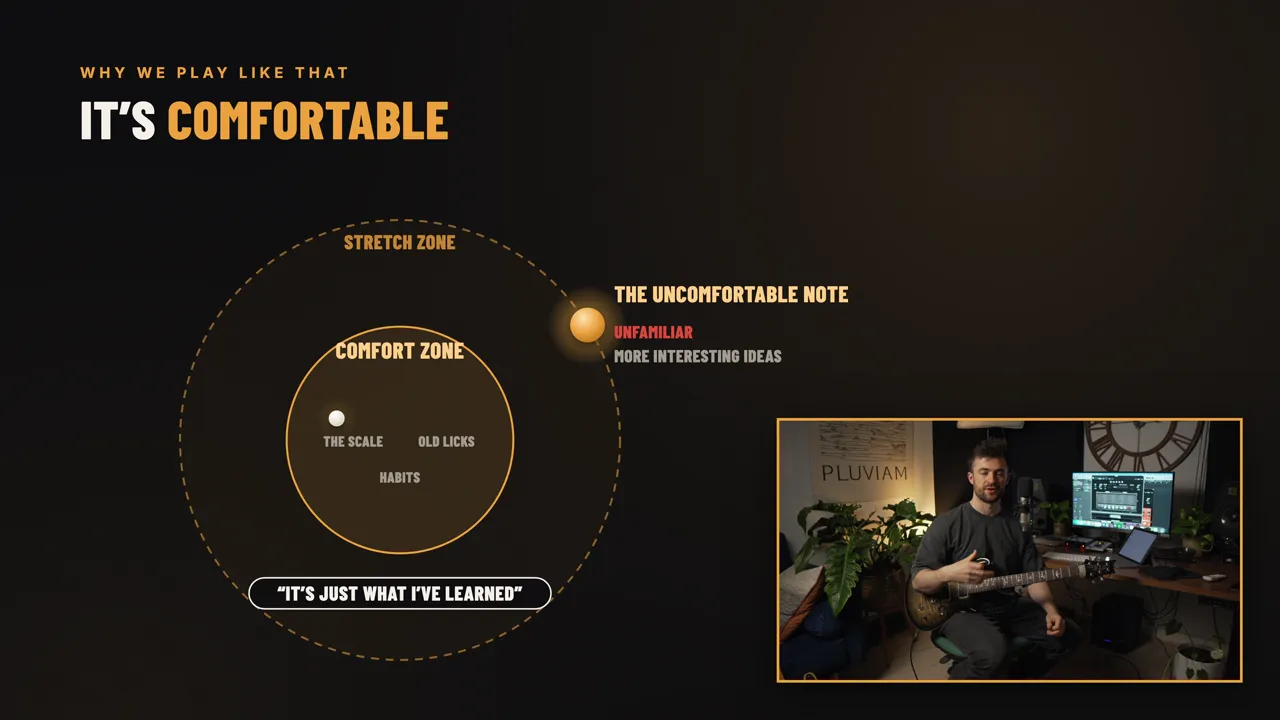
A lot of that is simply because it's comfortable. It's what you've learnt to play and how you've learnt to play it. So the fix is to deliberately go for the notes that aren't comfortable.
Phase 1: only play the uncomfortable note ▶ 0:53
Put on a backing track, or whatever you normally play along to, and spend five or ten minutes playing only the uncomfortable note. It's going to sound a bit silly, and you'll have to play quite slowly. That's fine.
So what counts as uncomfortable? From wherever you are, it's likely to be a note behind you on the neck, a note on a higher string, a string skip, or something just out of reach, maybe in another scale position.
Here's how I walked through it in E minor (E minor scale):
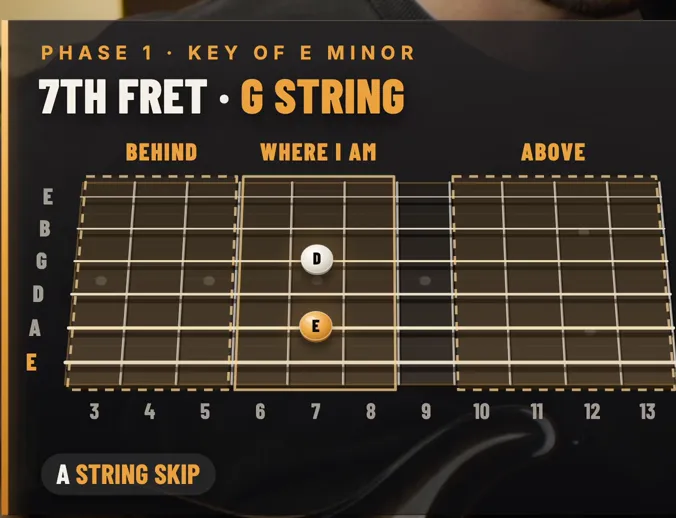
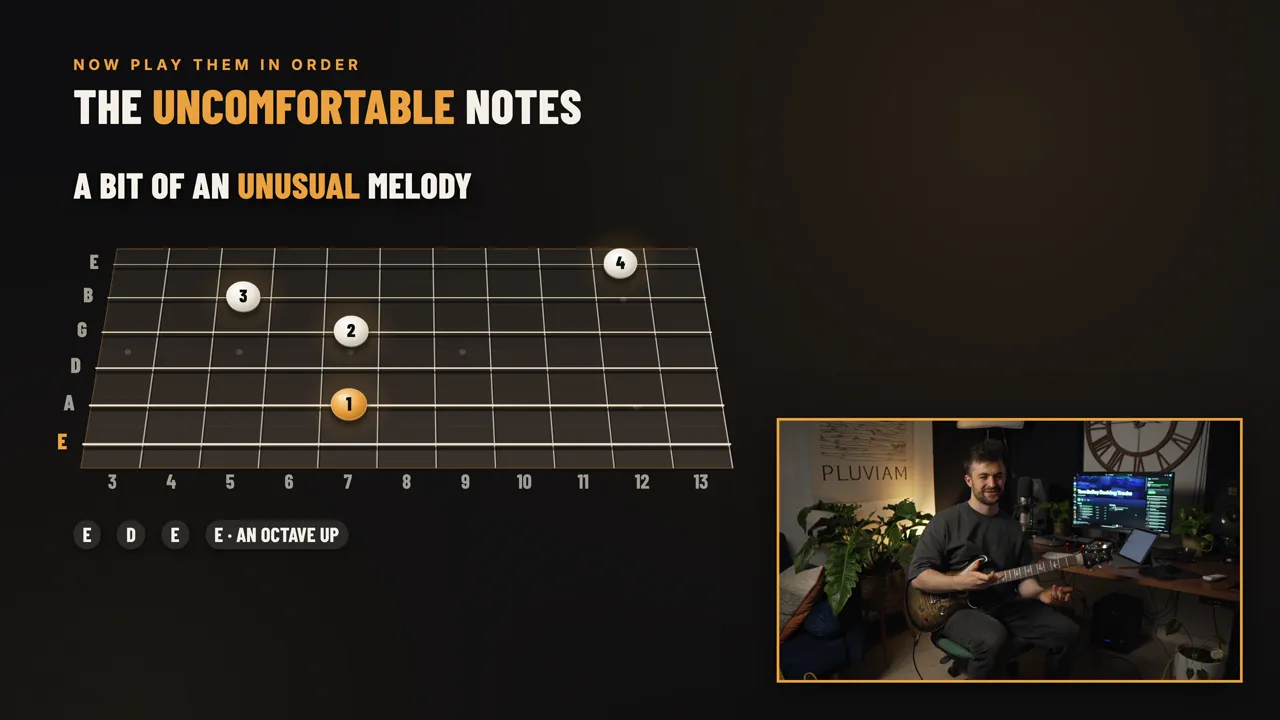
- Start on the 7th fret of the A string.
- An uncomfortable next note is the 7th fret on the G string. It's a string skip, so you have to either flatten your finger or get the second finger underneath.
- I hit that with my second finger, so from there the little finger has a bit of a reach to the 10th fret on the high e.
- Then from the 5th fret on the B string, jump out of the position to the 12th fret on the high e.
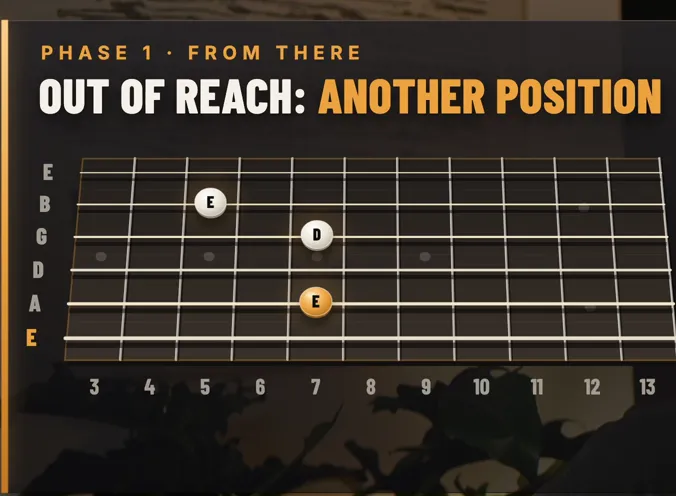
Play those notes in order and it's a bit of an unusual melody. It's actually not that bad, but you wouldn't want to play like that all the time. That's not the point of this phase. The point is to get you thinking differently about where the next note could be.
Phase 2: one awkward note, then a natural phrase ▶ 2:34
Now turn it into music. Play one, or at most two, uncomfortable notes, then follow them with a phrase that feels comfortable, natural and melodic.
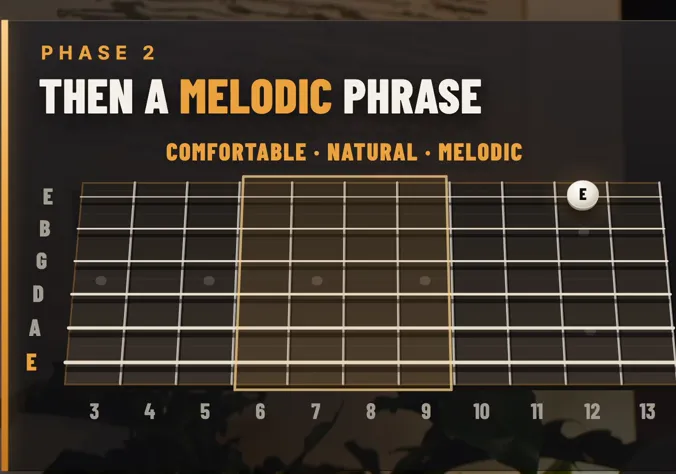
It helps to break the phrases up quite distinctly, with a bit of silence between each one: a hard note, then something simpler. They won't all be brilliant phrases. Mine weren't. But each one starts from somewhere you wouldn't normally have gone, and that's what makes it sound less like a scale.
How to fit it into your practice ▶ 3:49
You can skip straight to phase 2 if you like, but I'd suggest spending at least a couple of minutes on the pure uncomfortable-note version first. It won't sound super musical, but it gets you thinking the right way.
A good split is 15 minutes of this, then 15 minutes of normal free improvising with the idea in the back of your mind. Hopefully it'll start coming through in little moments without you forcing it.
Put an E minor track on in the Backing Track Creator, start on the 7th fret of the A string, and spend the first ten minutes only going where your hand doesn't want to go.