If you love a good heavy riff but you're a bit bored of drop D, this tuning might be for you. It's quite an unusual one. Bands like Alter Bridge, Mastodon, Periphery and Pentagram all use it on occasion, and I've heard people say Soundgarden too.
Here's what it is, how to get into it, and how to actually think about playing in it.
What the tuning is ▶ 0:41
The low E string goes down to B. That's it. The rest of the guitar stays in standard tuning. By modern metal standards B isn't even that low, but against a standard-tuned guitar it sounds massive.
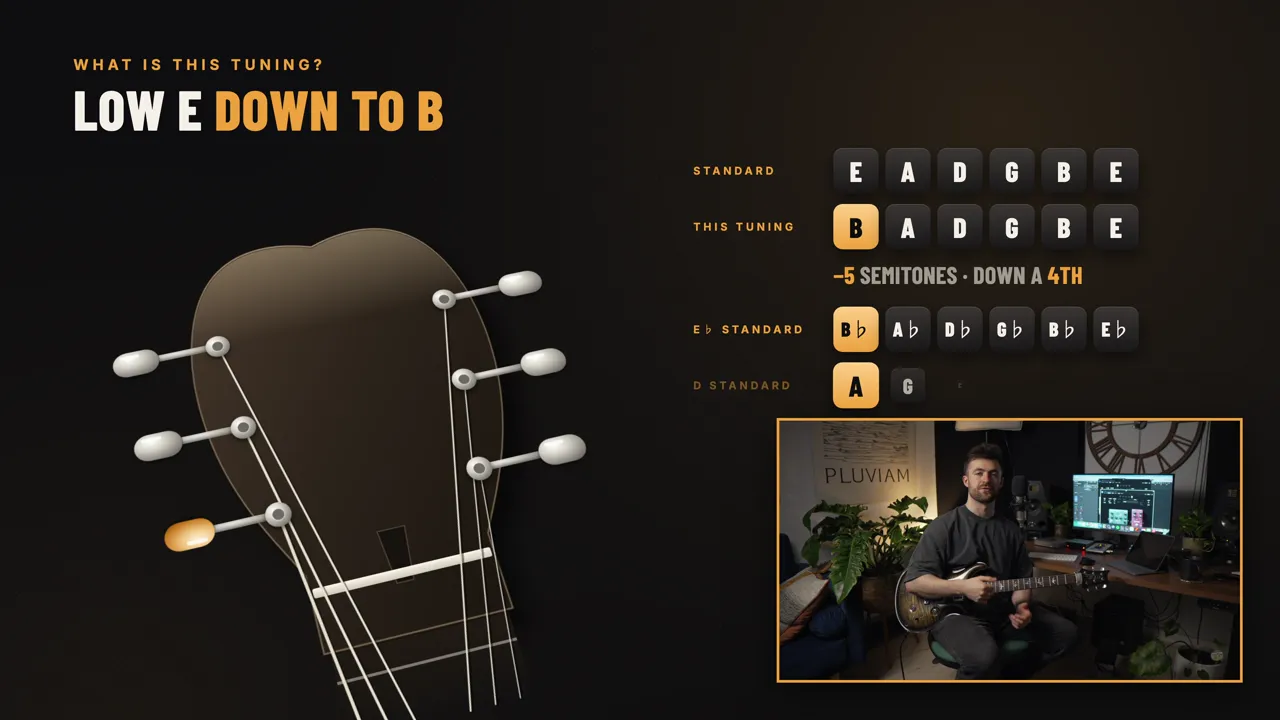
You can do the same thing from any tuning. If you're in E flat, the low string goes down to B flat. If you're in D standard, it goes down to A. And if you want to get even more ridiculous, you can keep going lower.
How to tune it by ear ▶ 1:01
To tune it by ear, match the low string to your B string. They're the same note, just a couple of octaves apart. Use a tuner if you'd rather not fight with it.
If you've got a tremolo, dropping one string that far will throw everything else wildly out of tune, so you'll need to go round the strings a few times. They should line up once you're tuned up properly.
Songs to learn in this tuning ▶ 1:21
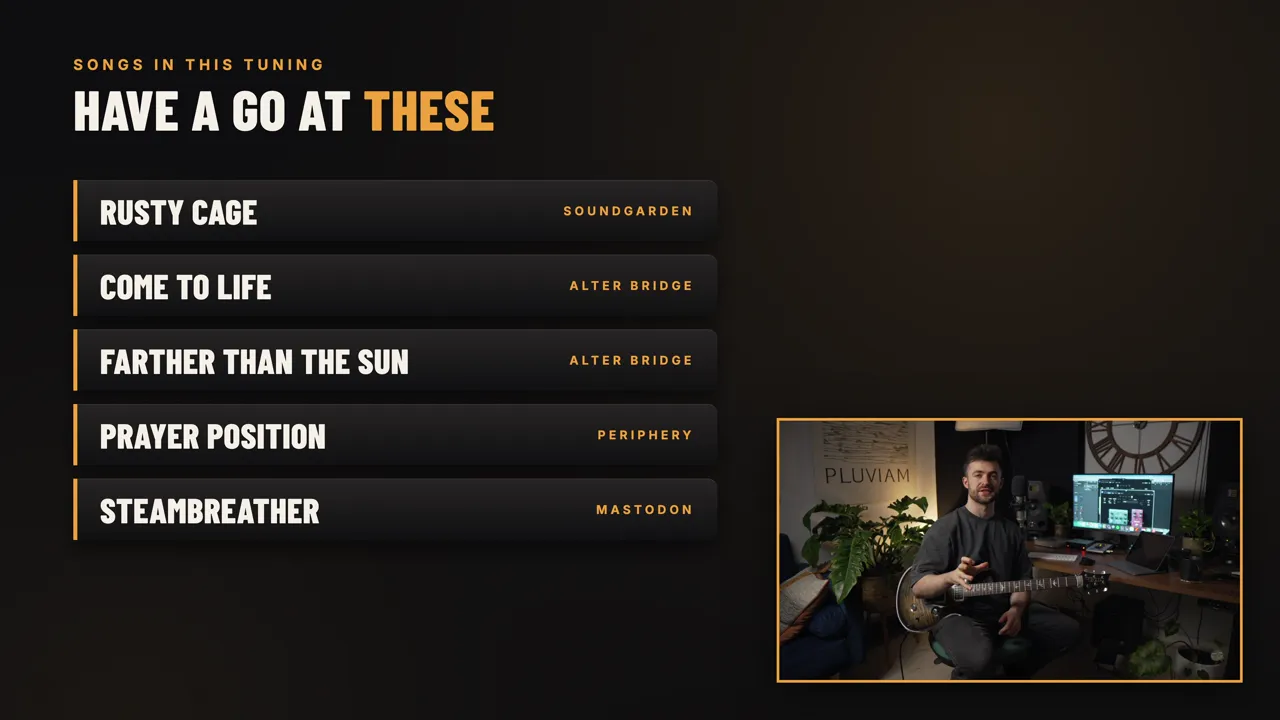
The easiest way in is to learn some songs you like. Come to Life by Alter Bridge is a good one, and here's a short list to have a go at.
Which keys and scales work ▶ 1:32
If you want to do the standard heavy metal thing of playing in the key of your lowest open note, you'll be in B. The classic heavy sounds are:
- B minor
- B Phrygian
- B Phrygian dominant
That first riff, Come to Life, is a good example of the Phrygian sound. Those scales are the notes available to you. Now let's get creative with them.
Power chord shapes give you octaves ▶ 2:07
Here's what's interesting. If you hold a normal power chord shape on the bottom two strings, say the 5th fret on the low string and the 7th fret on the A string, you don't get a power chord any more. You get an octave. Same with the open low string and the 2nd fret on the A string.
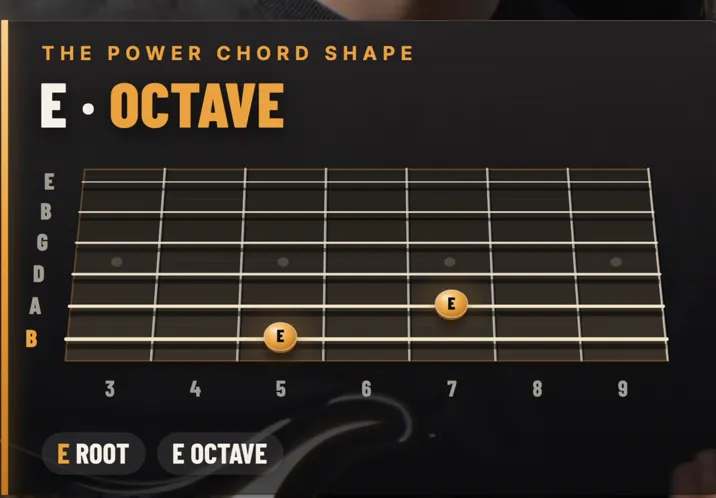
So instead of root and fifth, it's root and root. That gives you a really direct, droning low sound.
Where the power chord went: the add9 shape ▶ 2:40
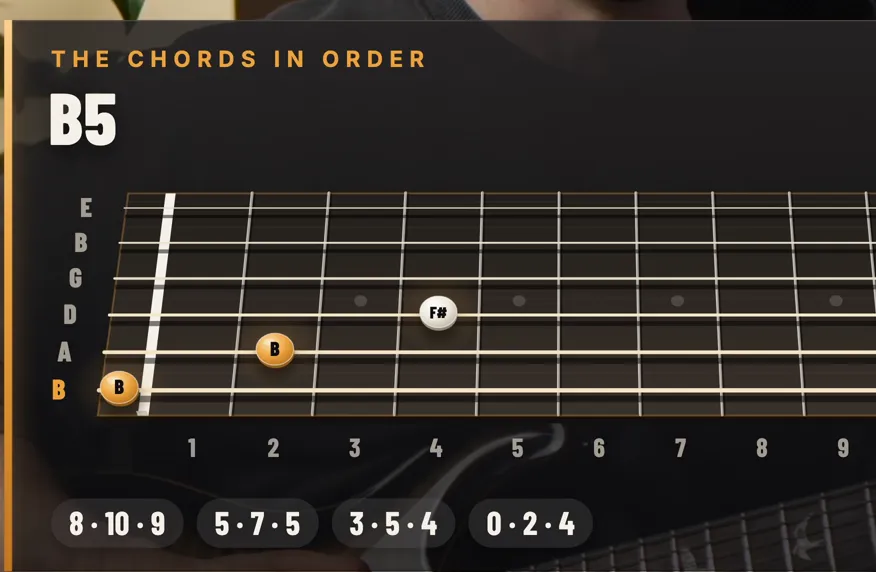
If you want the power chord sound back, use the shape that would normally be an add9 in standard tuning: 5, 7, 9 on the bottom three strings. In this tuning it gives you the root, the octave and then the perfect fifth above that.
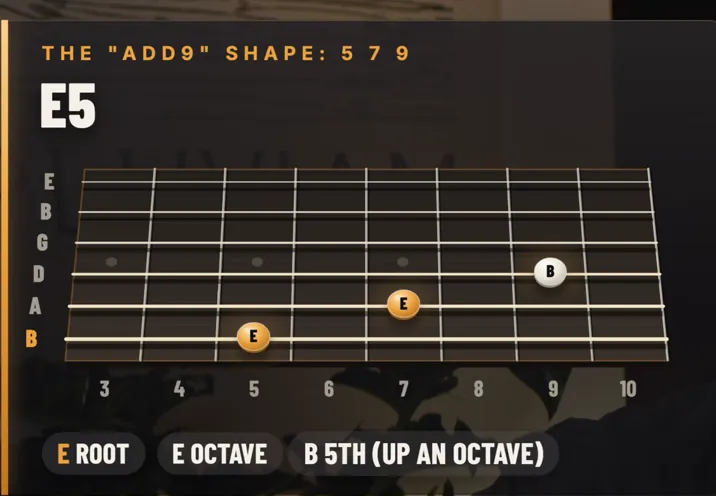
The open version is 0, 2, 4, which gives you B5.
Minor and major chords on the low strings ▶ 3:03
Start from that octave shape and add a note on the D string. For a minor chord it's 5, 7, 5 across the bottom three strings. For major, that last note goes up a fret to 6.
Move those around and you can string a few together. The progression I played was 8 10 9, then 5 7 5, then 3 5 4, then 0 2 4. You could also end on 0 2 0, which gives you a B minor.
Bigger B minor chords ▶ 3:52
Remember you're in B minor (or B Phrygian, whatever you're playing in). So take a normal B minor barre chord on the 2nd fret and let the open low string ring underneath it: 0 2 4 4 3 2. It's a nice big chord sound.
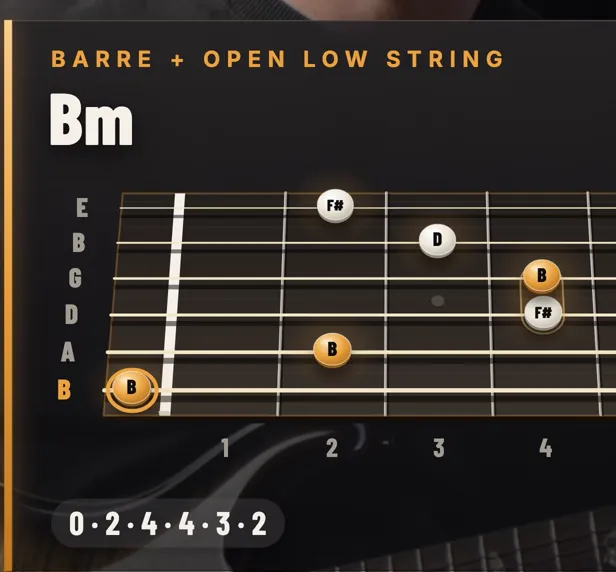
You can take the same idea higher up too: 0 9 9 7 7 7. If you know your CAGED system, finding these is a lot easier.
Go and try it
With those few shapes you can do all your normal riffy stuff. Mentally, you just need to be in the frame of mind of "I'm in B minor" or "I'm in B Phrygian". Drop that low string, learn one of the songs, then try writing a riff with the octave and power chord shapes and have a play around with it.


