How often do you find yourself saying "I'll work on that song as soon as I can do this or that"? I've had so many students tell me they're waiting to work on something. First they want to get a certain technique down, or understand a certain theory concept, and then they'll look at that song, that solo, that new idea.
In my opinion, that's quite a damaging mindset. Here's why.
You're probably not great at judging how hard a song is ▶ 0:41
The first thing I've noticed with a lot of students is that their sense of what's difficult isn't that accurate. So many times a student has said to me, whether it's the first lesson or several lessons in, "I'm not ready for this, it's way too hard." And I go, no it's not. You could do it today.
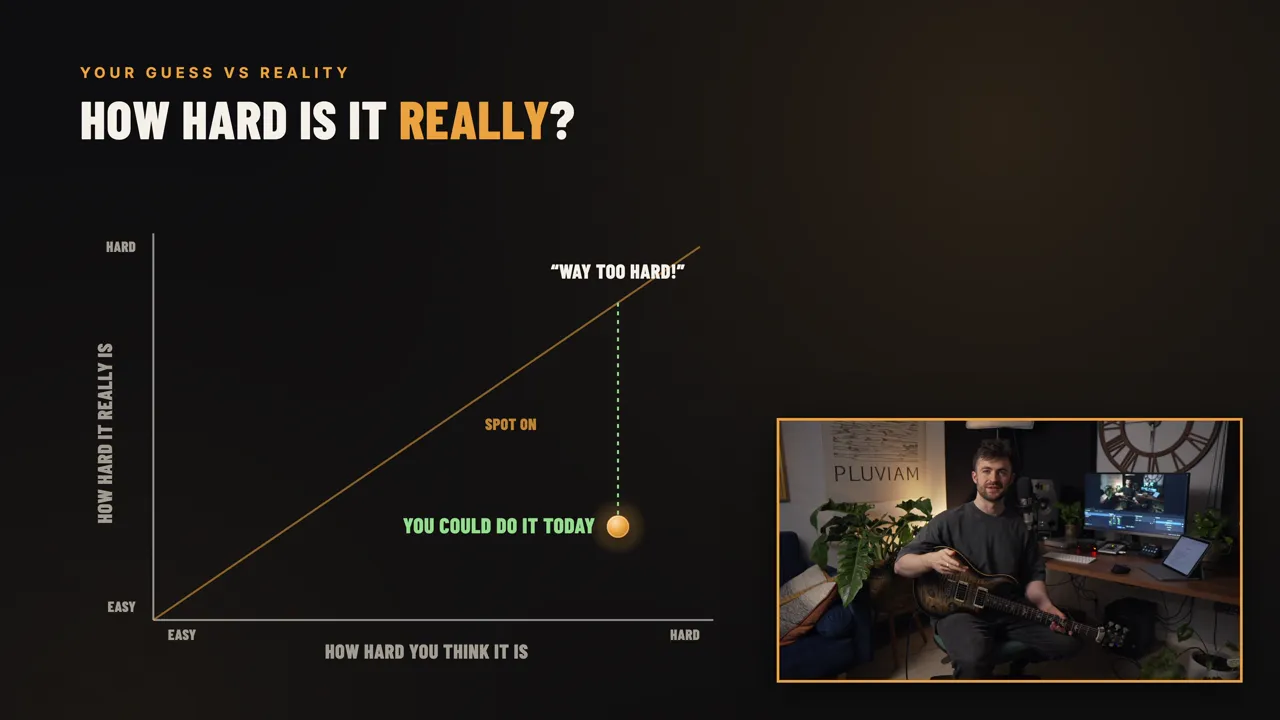
The opposite happens quite a lot too. Someone says they'd like to learn something, and I have to tell them that's actually quite difficult. We can work towards it and they can have a go, but we'll have to break it down into small sections.
So before you even think about working on one thing so you can eventually get to your dream song, make sure you've got the facts right. There's a good chance you haven't.
It kills your motivation ▶ 1:21
Say your dream is to play a Hendrix song, but you don't feel you've got the skills, so you set yourself a list of other things to get through first. If you don't enjoy those things on the way, you're going to really struggle to find the motivation to keep going.
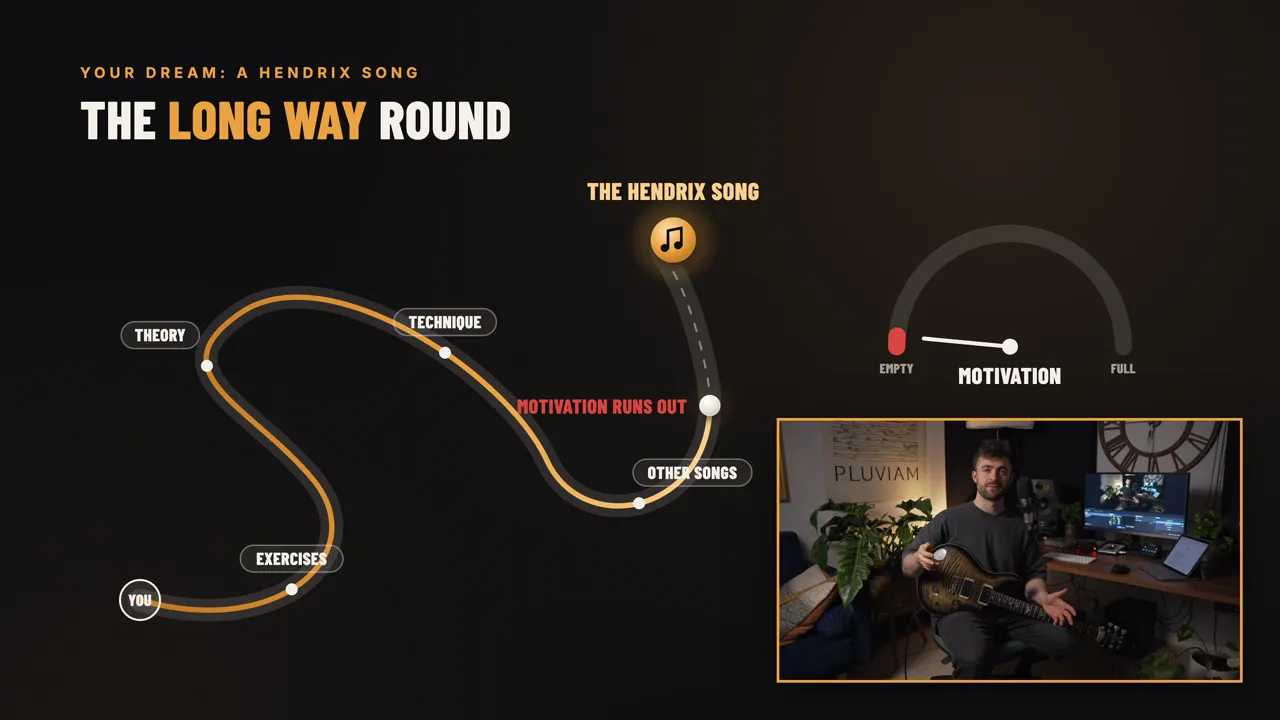
Whereas if you're working on the song you actually like, you can see why you're doing it, and you can see the results build up in that song as your skills grow.
There's definitely some use in playing other exercises or learning similar songs, especially if you're getting a bit bored of something that's hard for you. That can really help your sense of achievement. But don't put roadblocks in front of the song just because you think you have to.
It's prime procrastination ▶ 2:15
If you know you're a bit of a procrastinator, this is a classic. People don't like doing harder things because it shows them it's going to take a lot of work, or it exposes flaws in their playing or the way they learn. Easier things stroke the ego a bit. You go, "Oh, I can do this."
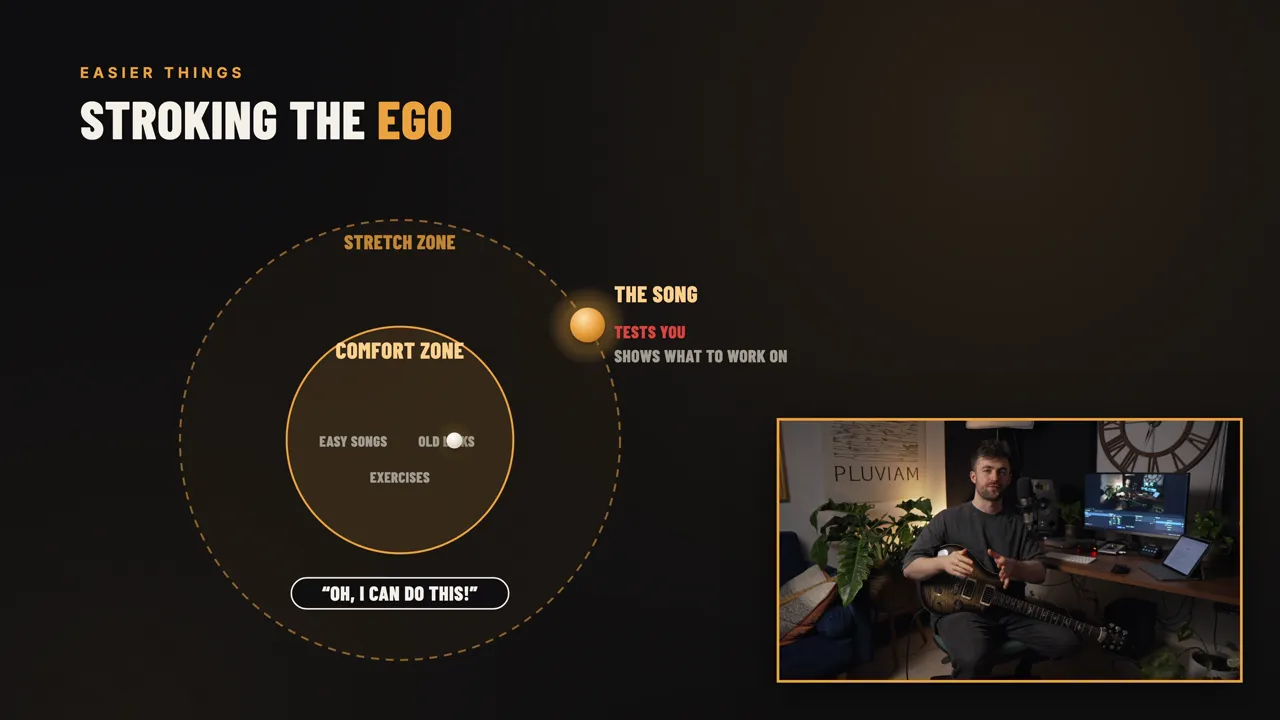
You might pick up some skills, but you're not really testing yourself. And if you keep taking the roundabout route, you may never actually get to the song.
If it really is hard, break it down ▶ 2:52
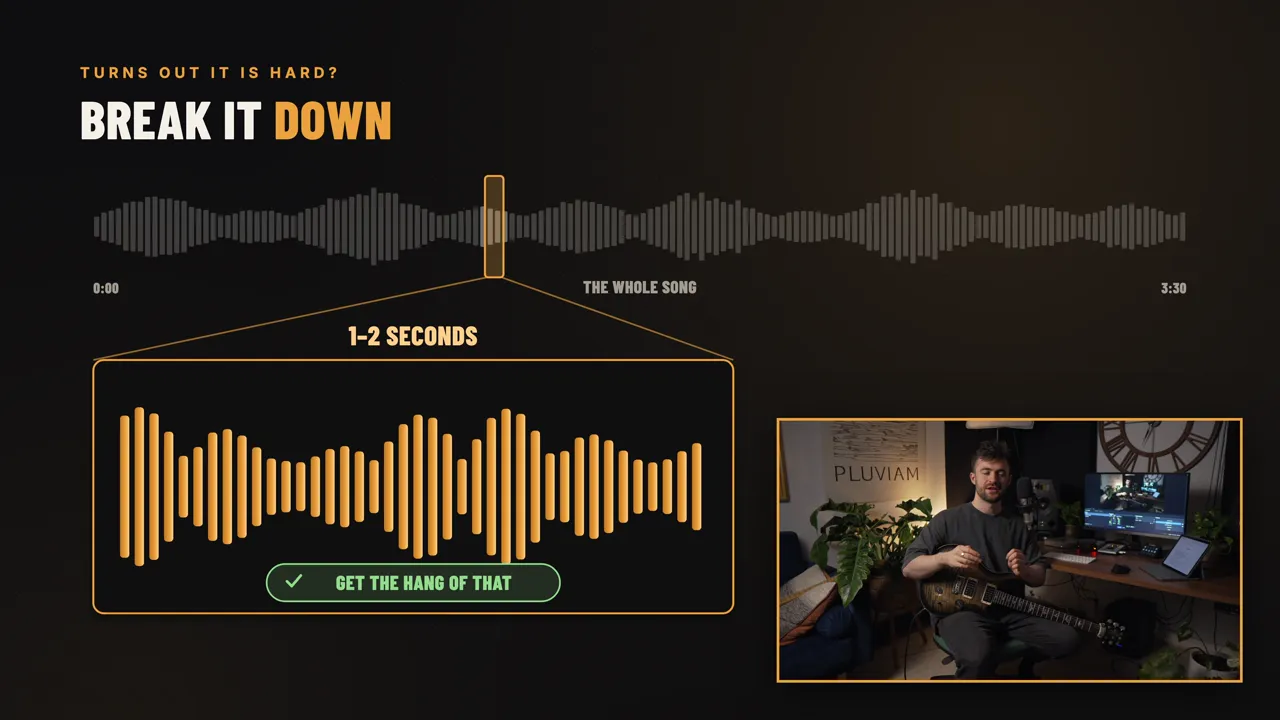
If you do look at this oh-so-difficult song and it turns out to be quite difficult, that's fine. Take a tiny section, maybe one or two seconds of music, and see if you can get the hang of that. I think you'd be very surprised how often you can.
And there's no harm in working on things a bit outside your skill set. They can open up new ways of playing and thinking that make the easier songs even easier.
Creating music is a separate skill ▶ 3:14
This applies to creative players most of all. A lot of people say they need to learn loads of songs and develop their theory before they start writing, improvising or creating anything.
But the skill of creating music is massively different to the skill of understanding music and playing it technically. We all know shredders who don't write very interesting songs, and loads of great songwriters who aren't the best musicians. These skills are more separate than you might want them to be.
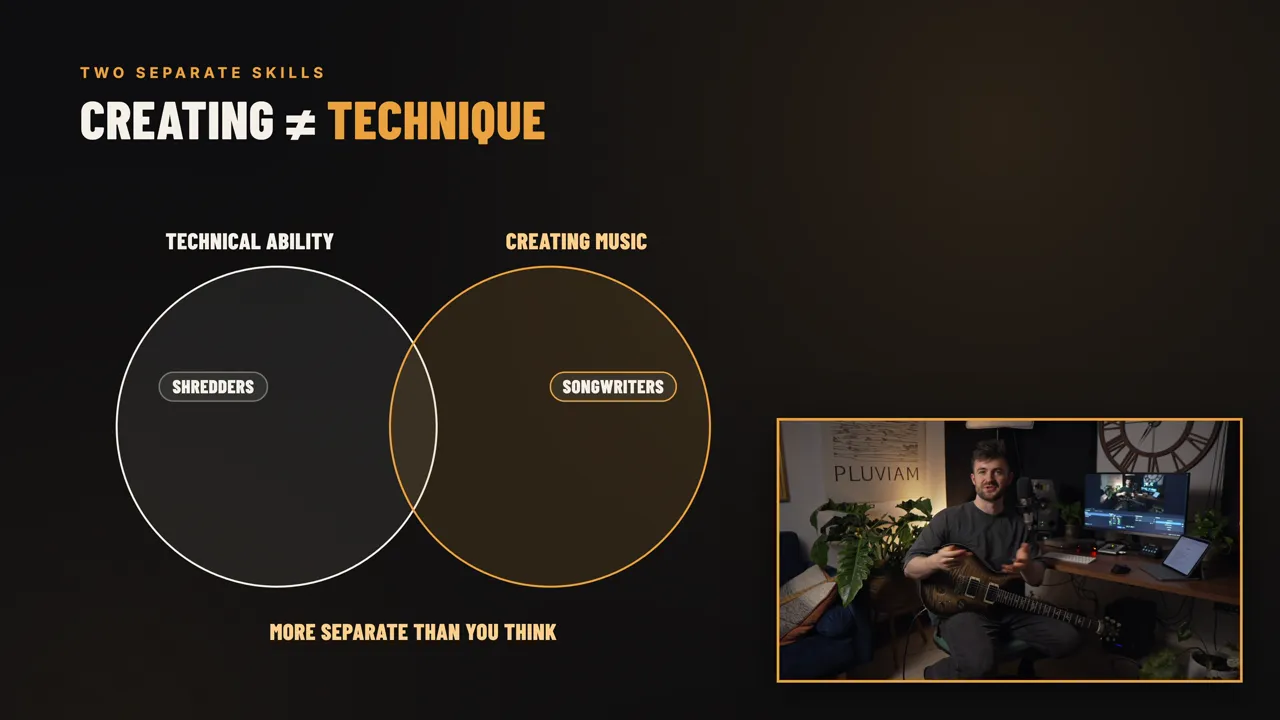
So if you want to be creative, you have to work on your creativity. Some of your guitar playing will carry over, but a lot of it won't. It probably won't sound great at first. But if you work on it, it'll get better. Some of the best songs and solos ever written are very simple, and some are very complicated, and you can work towards that.
The barrier to entry is quite low. If you've got some chords down, you know how melodies work, and your ear can tell when a note sounds bad, you can get going.
Have a go at the thing
So write a piece of music, or try that song you've been putting off for ages. Do it in small, digestible bites. You don't have to learn the whole song or a whole riff. Take one bar, or even just a few notes, and see if you can get them down. You might be surprised how much it changes your playing and your whole approach to the instrument.