String bending is one of the joys of playing the guitar. It's one of the big things that sets it apart from so many other instruments. So here are different ways to make your bends more interesting.
The first few are quite basic, and you may well have done them by accident. Don't skip them though. You might have just forgotten you can do them. It gets more unusual as it goes on.
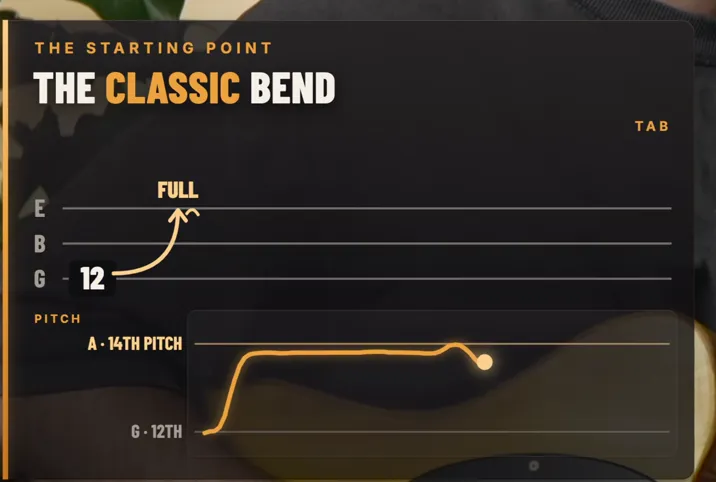
1. Rake into the bend ▶ 0:40
The first thing loads of guitarists do to add energy is a quick rake into the bend. I do this on pretty much every bend. Before you hit the bent note, push the pick through the muted strings above it (the thicker ones), so you get "clunk, clunk, clunk, bend". As you speed it up, it turns into a powerful thud going into the note.
It's a little tricky, and it forces you to work on your right hand muting.
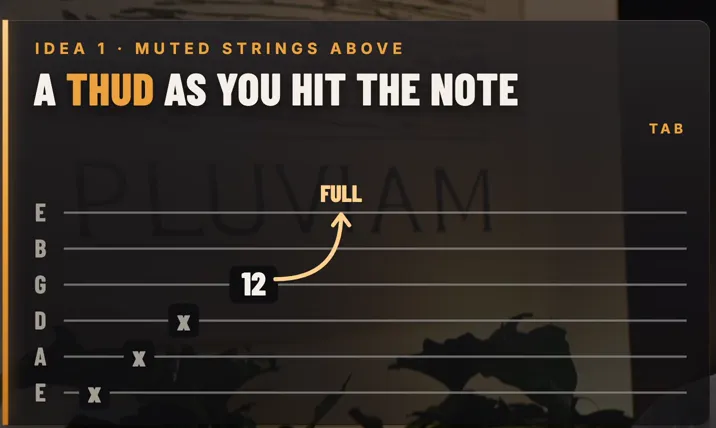
You can also do an upward rake: pull the pick up through the strings above the bend, the two thinner strings in my case, muted with the inside of your fretting hand's first finger.
2. The pre-bend ▶ 1:35
Slash uses these all the time. Instead of bending from the string's resting pitch, you push the string up to the pitch you want first, then pick it. So you don't hear the note go up, you just hear the bend at its peak, and then you let it down.
You need a bit of a feel for how far to bend, so it's good practice for pitching your bends.
3. The unison bend ▶ 2:09
Bend a note while holding another note on the next string up that's the pitch you're bending to. For example, bend the 12th fret on the G string while holding the 10th fret on the B string. Bending the G string a tone takes it to the pitch of the 14th fret, which is the same note as the 10th fret on the B.
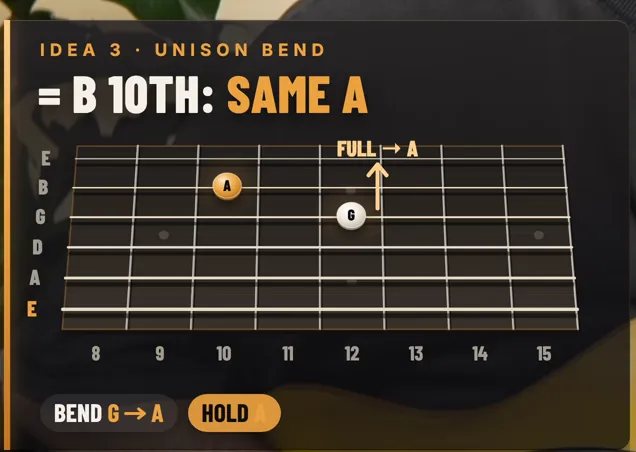
It gives you a nice crunchy sound, especially with distortion, and it's a great way to test how accurately you're pitching your bends. What's really cool is you can let it sit a little flat and hold it there for a second. It sounds kind of nasty and really brings out that crunchy overlap of the two notes.
Be careful if you've got a tremolo, because bending can pull the held note flat.
4. Other double-stop bends ▶ 3:08
You don't just have to hold the note you're bending to. Bend the 12th fret on the G string and hold the 13th fret on the B string, and you've got that AC/DC, classic blues rock kind of bend. You can hold the 13th fret on the high e instead, or on both the B and high e. That last one is a very typical country lick.
5. Slide, hammer or slide down into the bend ▶ 3:44
Slide up into a bend and it sounds like one big bend. You can also hammer on into the bend, or slide downwards into it. They all give the bend a more interesting introduction.
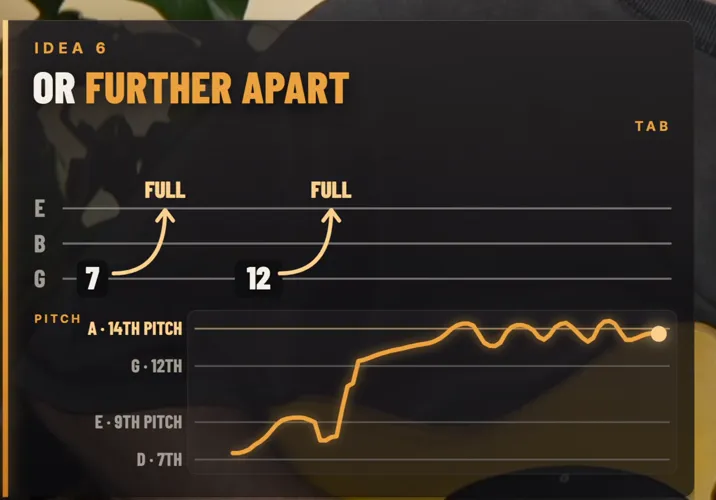
6. Two bends in a row ▶ 4:05
String two bends together, one straight after the other. Bend the 10th fret on the G string, then the 12th. You can spread them further apart too, say the 7th fret on the G up to the 12th.
7. Let it dip, then push back up ▶ 4:32
Another Slash-inspired one. Get the bend up to pitch, hold it, then let it dip slightly below pitch before pushing it back up again. You're not dropping a semitone or a tone, just a little, into an in-between microtonal note. It's quite bluesy and quite mysterious, and well worth playing with.
8. The jolt bend ▶ 5:01
I really like this one. Do a short bend, not up to pitch, just high enough to be noticeable. Then go straight back to the resting pitch and shoot up to the full bend. You can also make both bends go up to pitch. There's not a massive difference either way, and both sound pretty cool.
9. The overextended bend ▶ 5:35
Bend up to pitch, hold it for a bit, then nudge it even further. You're not aiming for a particular note, just an over-excited sound, almost like it accelerates out of the bend.
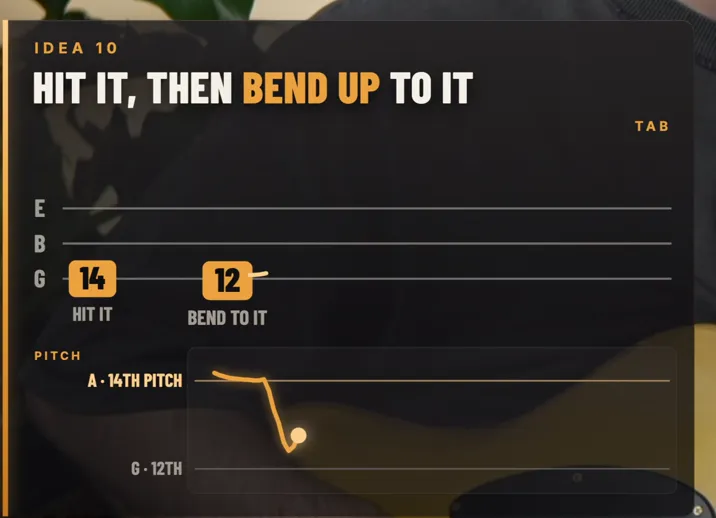
10. Bend up to a note you just hit ▶ 5:57
Hit the 14th fret on the G string, then immediately go back to the 12th and bend up to that same pitch.
11. The slightly flat semitone bend ▶ 6:11
David Gilmour loves a semitone bend. What I've noticed in a few of my students' playing, and I don't know if they always mean it, is that you can go a little flat with it. Bend just short of the semitone as a passing moment. I wouldn't hold it, and it's a bit grating, but it doesn't sound awful. There's something quite rigid about a full semitone bend, and the slightly flat one is a nice contrast.
12. The spooky ghost bend ▶ 7:17
I saw Greg Koch doing this one. Bend up, then add vibrato while you control the bend back down to the resting pitch. It sounds a bit silly, in a good way.
13. Bend plus tapping ▶ 7:38
John Mayer does this a lot, and Eddie Van Halen did too. Hold a bend and tap notes on top of it, or tap and slide.
What about vibrato? ▶ 7:58
I didn't cover vibrato much because it's really its own technique. But as a general rule, I'd add vibrato to every bend by default, and take it away for effect when you want a bit more drama, just hitting the note and sustaining it. A lot of beginners do it the other way round, where vibrato is a trick they add if they remember.
Pick two or three of these you haven't used in a while, put on a backing track, and work them into a solo. Have a play around with it.


