If your vibrato feels shaky, there's a way to practise it that I never hear other guitar teachers mention, and it's an obvious fix once you think about it: practise it to a metronome. Do that, and it becomes very hard not to sound even. Even vibrato is good vibrato.
Here's how to do it, how to use the free Vibrato Trainer on my site to make it easier, and five quick technique tips for getting that evenness into your hands.
What good vibrato actually is ▶ 0:28
Good vibrato is all about consistency. You could have wide, characterful vibrato or subtle, slow vibrato, and both can sound great. If it isn't even, though, it will sound odd.
That's why I like this approach. Once your vibrato is even, you can decide what you want it to sound like, and whose playing you want it to resemble.
Most people will tell you that you simply have to practise vibrato, and that's true; it will probably come if you keep at it. For my first few years of teaching, that was my approach too: do it a lot, turn your wrist and see what happens. There is a quicker route, though.
One click for every turn ▶ 1:00
Instead of going by feel, work to a defined speed. Play your note, pull it down, and let it come back. With a metronome, each part of that movement gets a click:
- a click for the starting note
- a click for the top of the pitch
- a click for coming back down
Then repeat. Click, click, click, click.
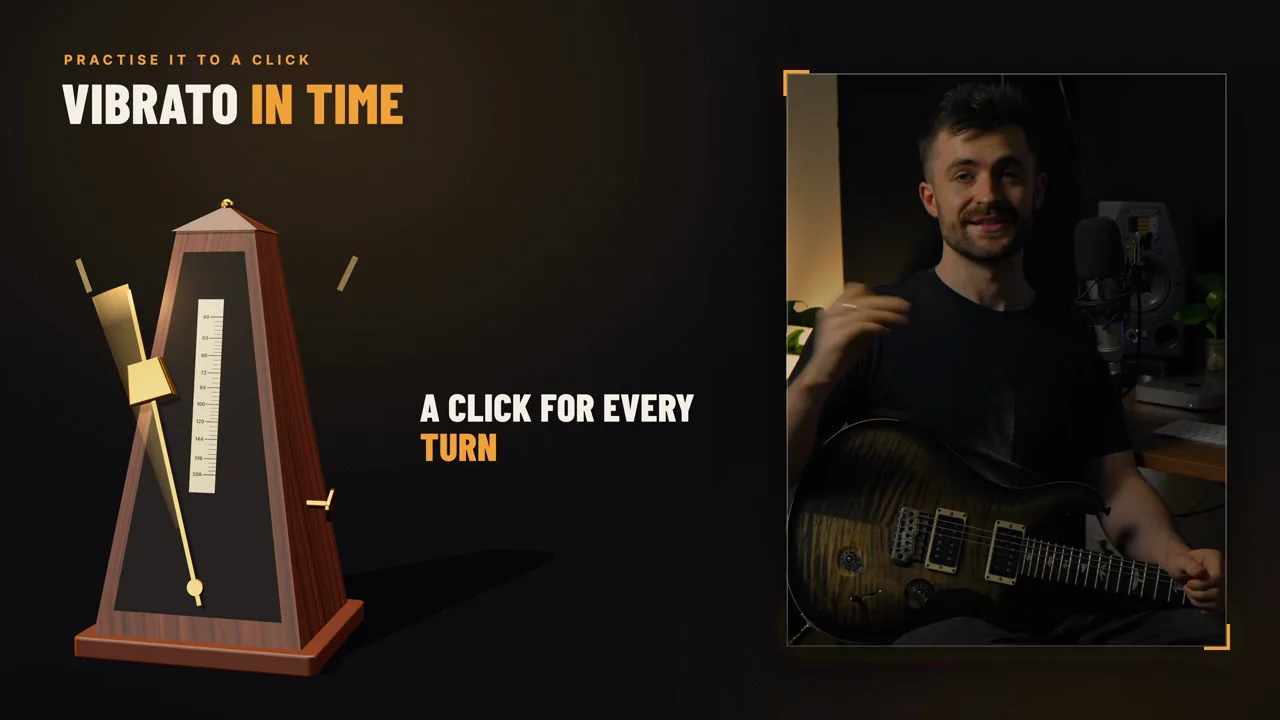
At first that's obviously rather slow, and it won't sound like vibrato. It will sound like a note going up and down, and that's fine. You simply speed it up, and somewhere along the way it starts to sound like vibrato, only now it's even.
Playing along with the Vibrato Trainer ▶ 1:23
You can do all of this with an ordinary metronome, but the Vibrato Trainer on my site is designed specifically for it, and it's free. It plays a guide note that moves up and down in time with the clicks, and draws a line showing where the pitch should be at every moment.
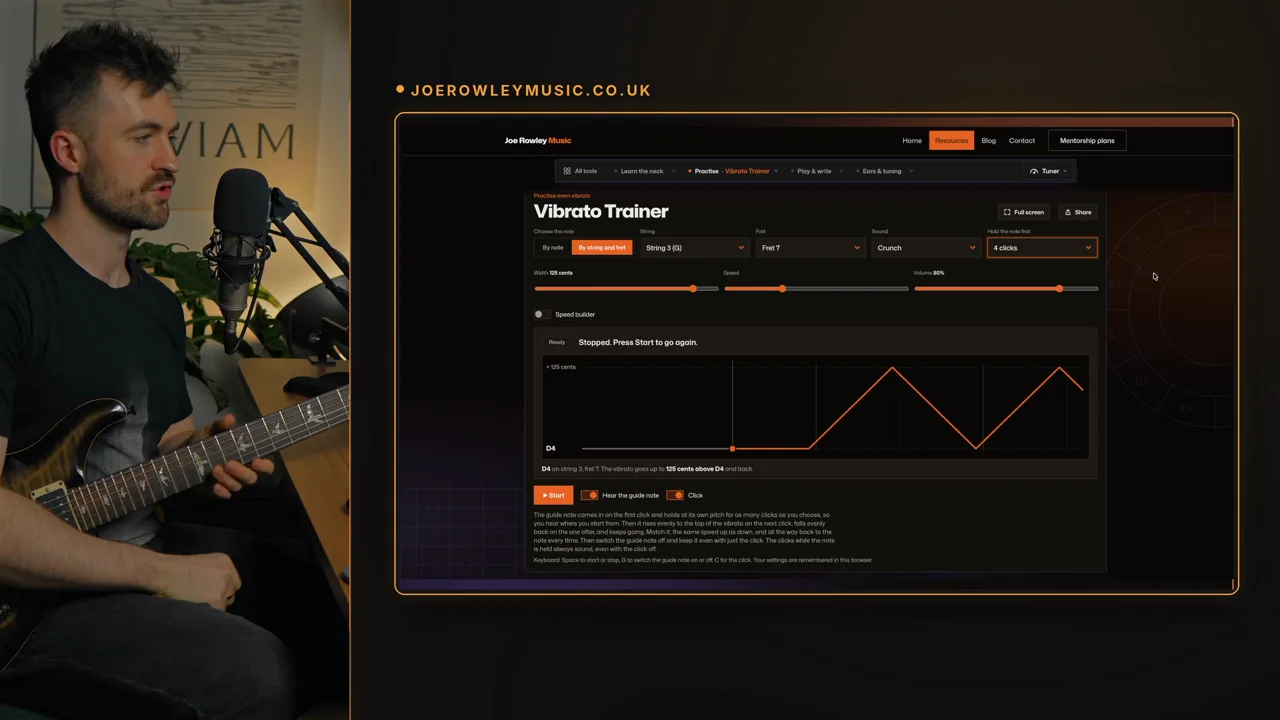
In the lesson I used the D on the 7th fret of the G string with the crunch sound. A few settings are worth knowing:
- Speed: start slow. Slower than you think.
- Hold the note first: I set it to four clicks, so you hear the starting pitch before it moves. I joined in on the second click.
- Width: make it wider or shallower. You can change it while it plays.
Then follow the line and try to match the pitch on the screen with what you're playing. I found the visual very helpful: I imagine my finger moving up and down with the line, as if the line were on the string itself. If the note dies away at slow speeds, pick it again on each turn.
Once you've matched it, raise the speed slightly and go again. Keep doing that until you reach a normal vibrato speed.
Build the speed gradually ▶ 4:08
The trainer also has a small speed builder. Set a start speed nice and low, an end speed well above it, and how long it should take to get there. One minute is plenty. It starts slowly and accelerates as you go, so you can really feel the build.
If you want to work without the guide, turn the guide note off and keep only the click. That's vibrato to a metronome, and it will sound even.
Lock your fingers and turn from the wrist ▶ 5:11
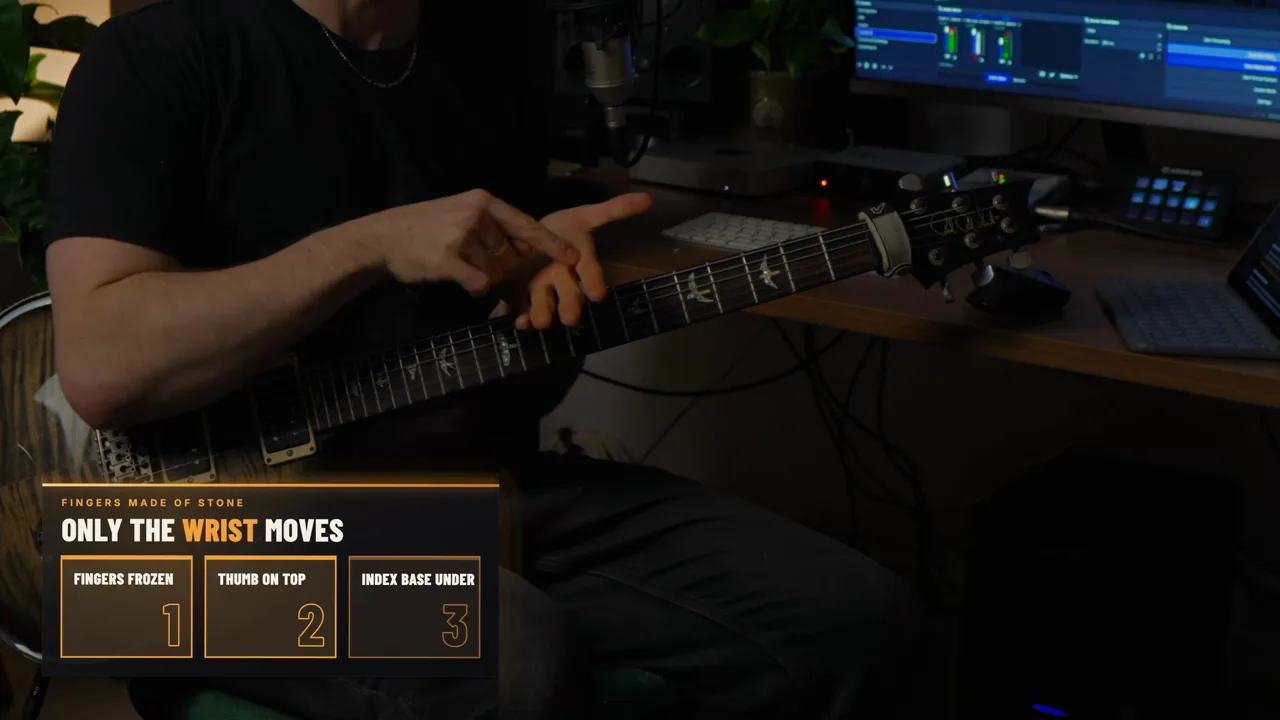
Now for the physical side. First, lock your fingers in place. When I play vibrato, my fingers are pressed together and held fast, whichever finger I'm using, and the movement comes from turning the wrist.
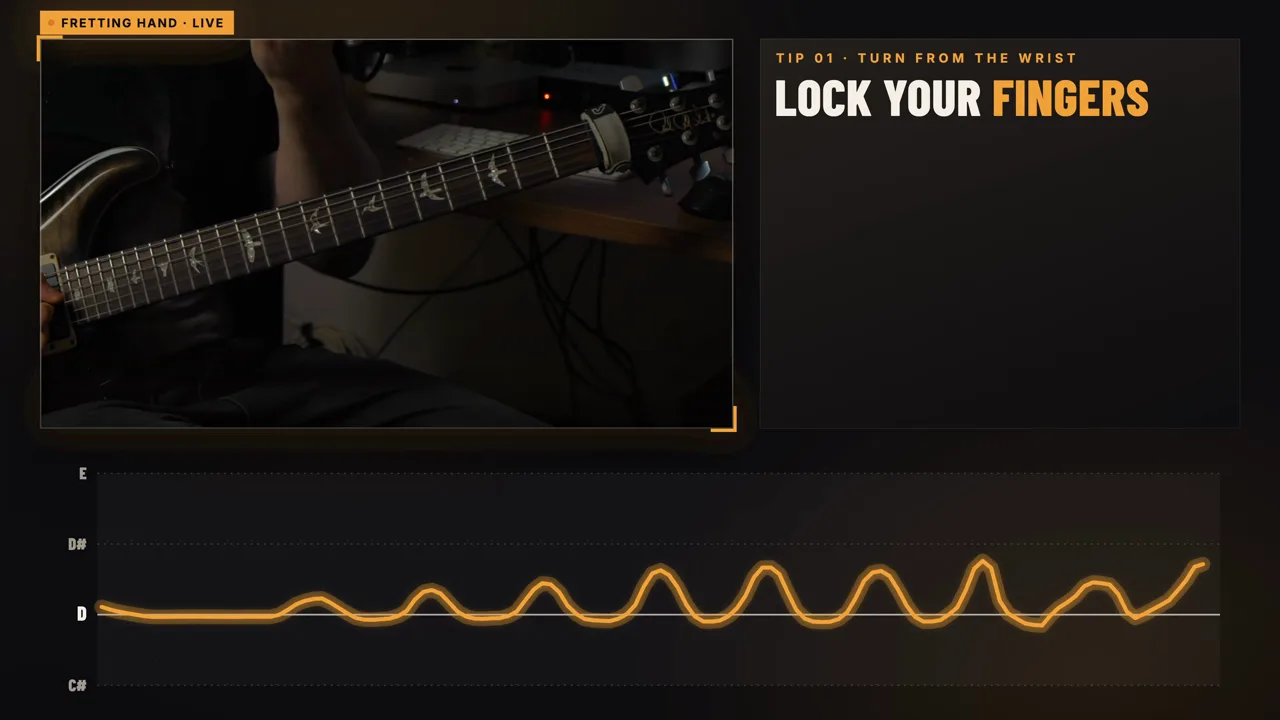
You want your fingers to be completely frozen. Imagine they're made of stone and you just turn the wrist.
Because of that, you need to be anchored on both sides of the neck: thumb on top, and the base of your index finger on the underside.
Use your second or third finger ▶ 5:37
Generally, vibrato is easier with your second or third finger, as they're slightly stronger. You can also place your first or second finger behind whichever one is doing the vibrato to help pull the string. That puts more force behind it, so the string is easier to move.
Wider means faster ▶ 5:54
A rule of thumb I like: the wider your vibrato, the faster it needs to be. A very wide vibrato played slowly sounds rather ridiculous. Keep the same width and speed it up, and it sounds energetic and works.
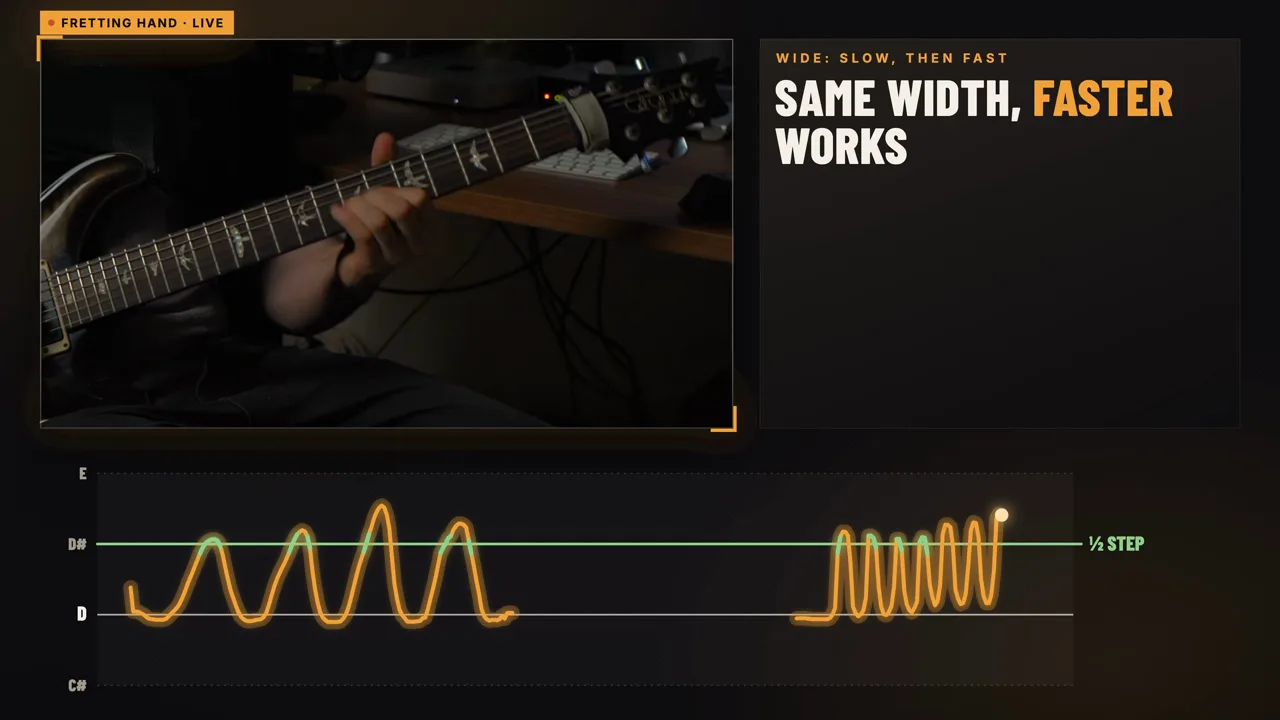
The reverse applies too: narrow vibrato can afford to be slower.
Hold the note, then add the vibrato ▶ 6:12
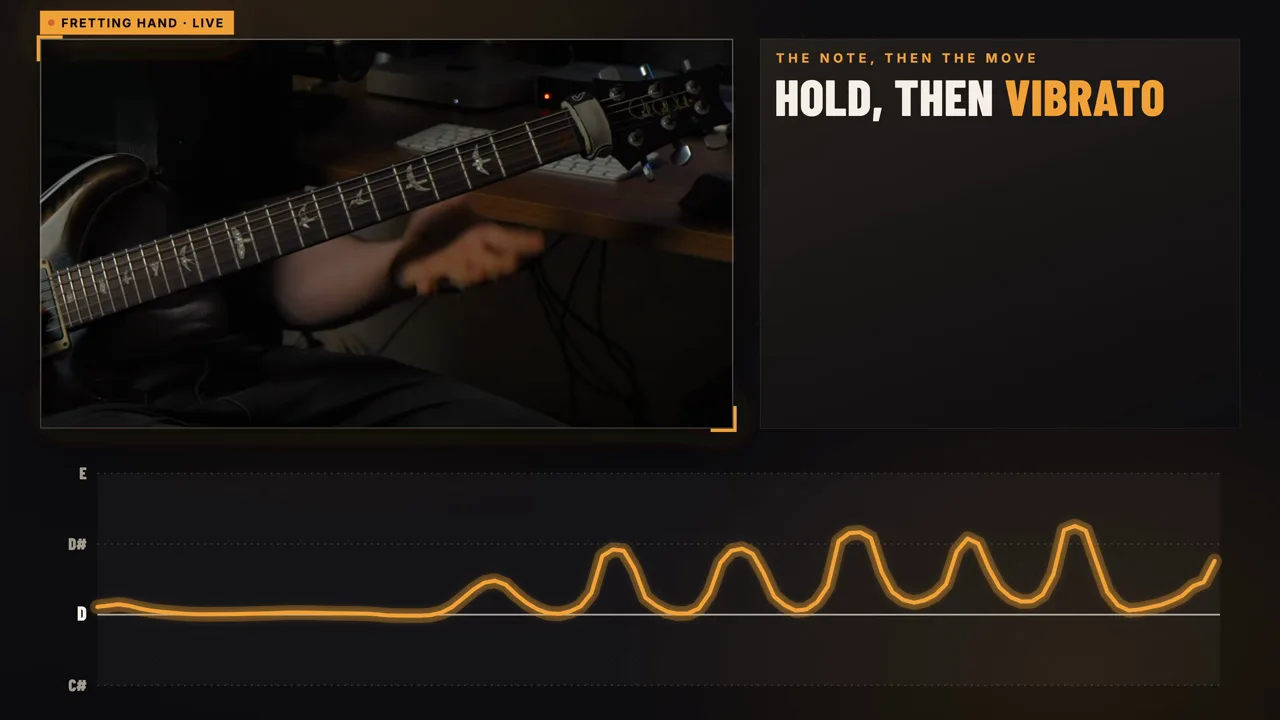
Play the note and hold it for a second before adding the vibrato. It sounds much better than starting the vibrato straight away, because otherwise the first thing the listener hears is the wobble rather than your note.
Vibrato on a bend: start wide ▶ 6:29
If you're adding vibrato to a bend, I'd suggest going wider to begin with. Many people try to control it too much. Go wider and rein it in from there. That comes from experience and teaching rather than any theory. I don't really know why it works; it just seems to.
Go and try it
Set up the trainer for yourself, or just use a metronome. Choose one note, start slowly with one click per turn, match the line, then nudge the speed up a little at a time. Lock your fingers, turn from the wrist, and hold the note before you add the movement. Do that for a few sessions and see whether your vibrato evens out. I'm confident it will.
Make it easier: keep the width narrow and the speed very slow, picking the D at the 7th fret of the G string again on each turn so the note never dies away.
Make it harder: use the speed builder to climb to a normal vibrato speed over a minute, then switch the guide note off and keep it even with only the click.