There's one question I hear from students that, in my opinion, is the clearest sign they're going to quit. It's simply: how long will it take until I achieve X? How long until I can play this song, improvise fluently, or play at this speed?
It's a perfectly fair question. You want to know when you'll reach the place you're aiming for, and I've asked it myself plenty of times. But I often find that students lose motivation when they stop seeing progress towards that goal, or never see any from the start. Here's why it causes problems, and what I'd ask instead.
When it's a fair question ▶ 0:44
In fairness, it isn't a bad question. I ask it about small day-to-day tasks all the time, and it's useful for short-term projects lasting up to a few weeks, or even a month. If you're trying to take a few minutes off your 5k time, that's something you could plot over a few weeks.
The trouble starts when it's the first thing you ask about a long-term goal on the guitar.
The result takes over ▶ 1:03
If the first thing you want to know is how long, the guitar playing probably isn't what you're after. The result is. The guitar stops being the thing you're focused on and becomes the thing you're using to reach the result you want.
Deep down, you probably know that playing the guitar is what you want to do. But all of us overthinkers feel we need something to pursue, and we lose sight of where the real fun of the instrument lies: in playing it.
The fun gets put off ▶ 1:29
When you ask how long it'll take, you're living by the assumption that the good part comes later. You don't get to enjoy it now. It's all deferred gratification, and you're holding off enjoying it until you've achieved whatever it is.
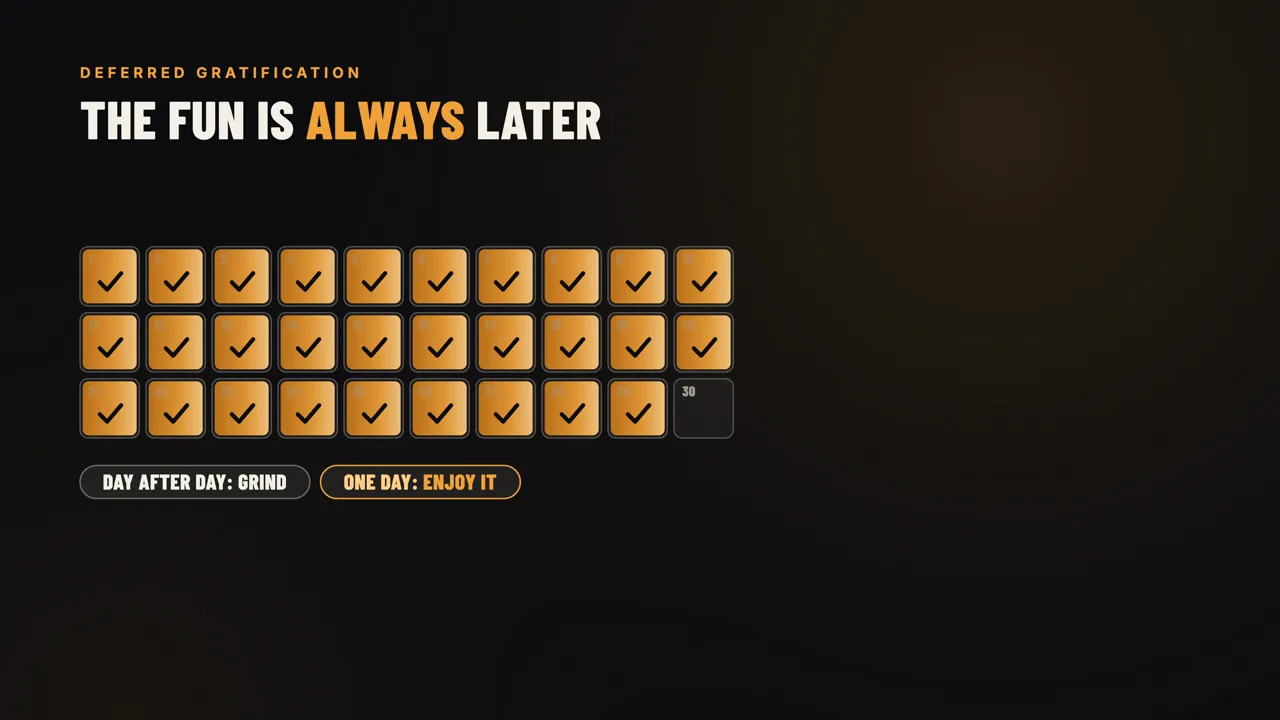
You can grind your way through that, and there is some fulfilment in working hard towards something. If you're making progress with a goal in mind, don't let this put you off. But chasing rewards in something that's a passion project for you can kill the fun behind it. Once you start measuring something, it becomes less enjoyable.
Nobody knows the answer ▶ 2:14
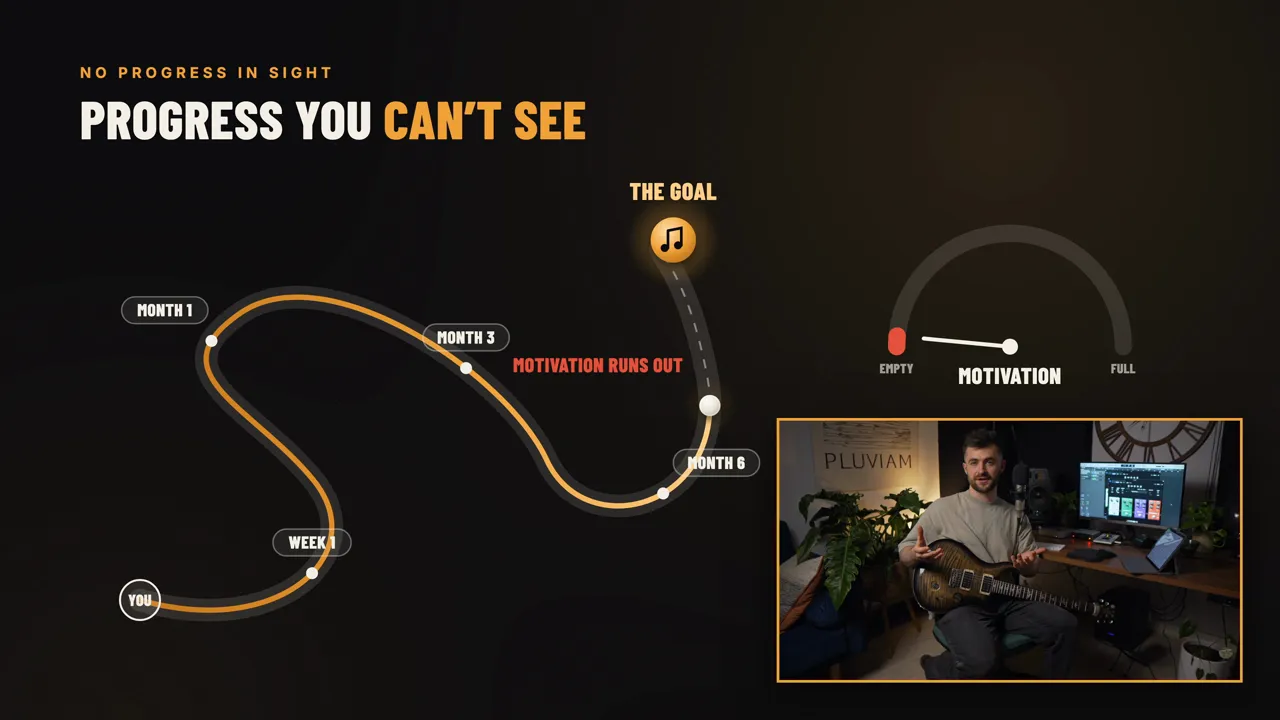
If you ask me (or ChatGPT, or anyone else) how long it'll take, the answer is almost never going to help you. If I say six months, you might think that's a long time and lose motivation immediately. If I say two weeks and it takes longer, you'll lose motivation. And if I guess exactly right, it made no difference anyway: you've simply done what you were supposed to do.
People also vary so much in how they develop on the instrument that it's very hard to guess. And if you're a beginner or an intermediate player, the chances of you estimating what's missing from your playing are low, because you don't know what you don't know.
The buzz doesn't last ▶ 3:01
The other part of the problem is that when you do get there, the high wears off quickly, and you realise the enjoyment was in the pursuit all along. Once something becomes easy to play, it simply becomes normal. I couldn't tell you how many times that's happened to me. If anything, I just grew frustrated that I couldn't do it better.
Goals, done right ▶ 3:25
So are you allowed goals? Yes. There's an interesting study in which a group of young people were taught to throw darts. Half were told to focus on their score, the other half on their technique. Those who focused on their score did worse, and enjoyed it less.
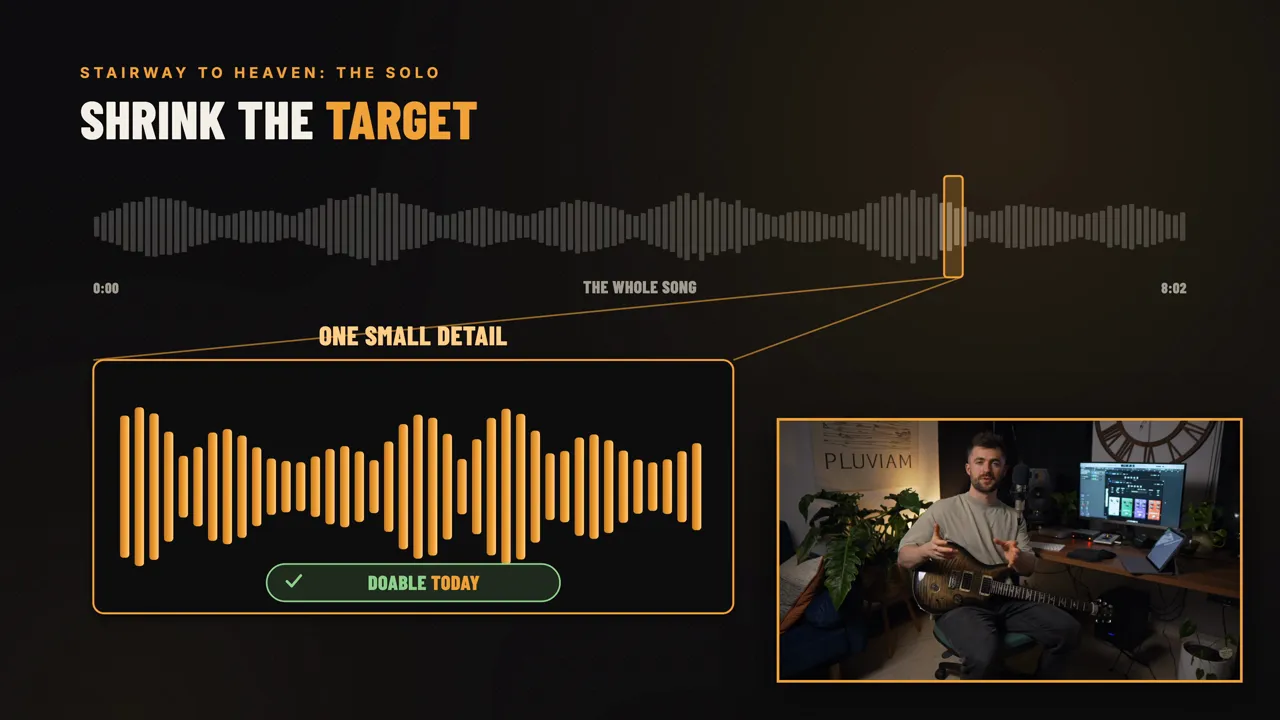
So if you want to learn the solo to Stairway to Heaven, keep that goal. But rather than thinking about it constantly, focus on the minutiae: all the small details that make the solo what it is. Somewhat ironically, you'll feel a greater sense of achievement that way, because you're making concrete progress on small sections day to day.
I used to agonise over my songwriting and spend ages on a single song, because I wanted it to be perfect. When I stopped being such a perfectionist and gave myself less time to finish each song, my songwriting improved through iteration and repetition.
Better questions to ask ▶ 4:49
If you want a goal, set one that's achievable in the short term and ask yourself: what's the next thing I need to work on? Or, if you're lucky enough to have one, ask your guitar teacher or a more accomplished guitarist what they think you could work on.
For a less goal-oriented question, ask yourself: what do I actually want to play? Several students have told me they want to learn the 12-bar blues and their scales because that's what guitarists do. When we dig a little deeper, it turns out all they wanted was to play a few songs.
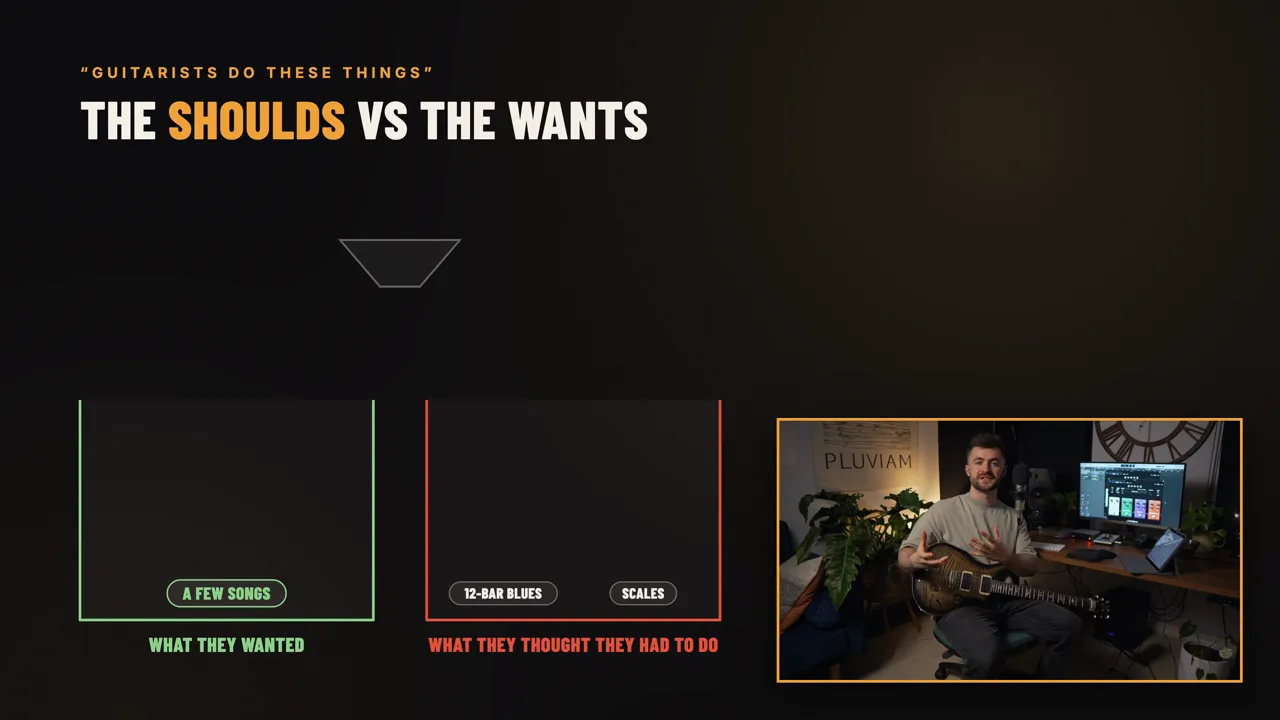
What we're doing is swapping a long-term deadline for a short-term next step, and leaving room to enjoy the instrument. And if you play some easier pieces you really want to play, you'll probably find you want a challenge, at which point the challenge is your choice.
The last one: how far have I come? Not with a time frame in mind. Don't worry about how long it's taken you. Simply look at where you were and where you are now.
Which brings me back to the first point. Are you picking up the instrument because you want to achieve something, or because you want to enjoy playing the guitar? It's something to think about.


